
Controlled communication and case access.
C3I Detective & Security Services
Confidential intelligence for decisions that matter.
Professional investigation, corporate intelligence, digital forensic and security consulting services for individuals, organisations and legal professionals.
C3I
Led by Major Yashpal Singh Nagar
Retired Indian Army Officer · Founder & CEO
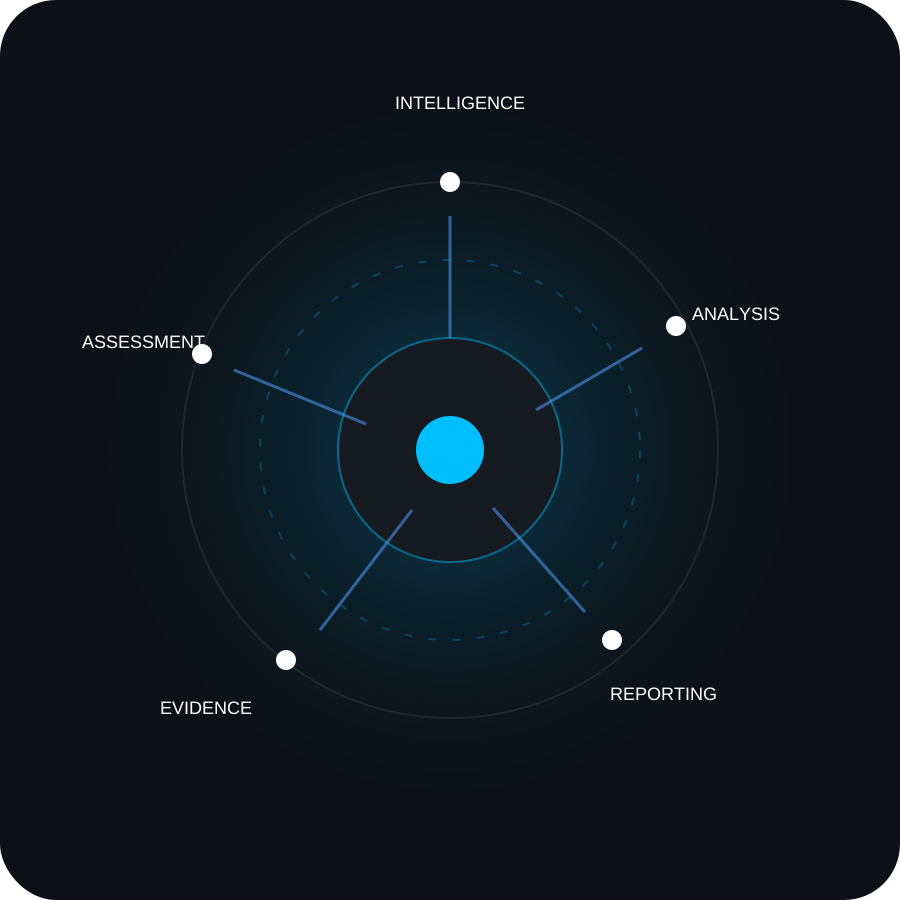
Why C3I exists
Four principles guide every engagement.
C3I is built around a disciplined approach to information, evidence, confidentiality and decision support.
Competent
Investigation planning grounded in relevant methods, context and professional judgement.
Capable
Field, digital and analytical capabilities coordinated around the question to be answered.
Confidential
Client information is handled through controlled workflows and agreed channels.
Intelligent
Evidence is interpreted carefully so clients can act with greater clarity.
Investigation services
Specialist support across four service pillars.
Each engagement begins with a confidential assessment of objectives, constraints, risk and expected outcomes.
Personal Investigations
Discreet support for personal, matrimonial, family and background-related concerns.
- Pre-matrimonial verification
- Infidelity investigation
- Background verification
- Missing person enquiries
Corporate Investigations
Investigation and intelligence support for fraud, misconduct, due diligence and business risk.
- Corporate fraud investigation
- Employee misconduct
- Vendor verification
- Corporate due diligence
Digital & Forensic
Technical investigation support for digital evidence, devices, communications and online activity.
- Mobile forensics
- Computer forensics
- Email investigation
- Digital evidence preservation
Security Consulting
Risk, threat and security assessment for executives, organisations and sensitive operations.
- Risk assessment
- Threat assessment
- Executive protection review
- Security planning

Leadership
Discipline, judgement and responsibility at the centre.
Major Yashpal Singh Nagar
Retired Indian Army Officer · Founder & CEO
C3I’s leadership philosophy is based on structured planning, professional discretion and evidence-led decision support. The objective is to establish reliable facts and communicate them responsibly.
- Integrity in every engagement
- Evidence before assumptions
- Confidentiality by design
- Clear reporting and communication
Industries
Support shaped around sector-specific risk.
Different industries face different evidence, compliance, fraud and operational challenges.
LF
Law Firms
Litigation support and evidence development.
INInsurance
Claims verification and fraud investigation.
BKBanking
Due diligence, risk and financial enquiries.
MFManufacturing
Vendor, employee and operational risk.
HCHealthcare
Compliance, misconduct and verification.
EDEducation
Background, safety and internal enquiries.
GCGovernment Contractors
Compliance and third-party risk.
REReal Estate
Asset, party and transaction verification.
TCTechnology
Digital evidence, IP and cyber investigation.
Investigation process
Professional, methodical and confidential.
- 1
Consultation
Understand the concern, intended outcome and sensitivity.
- 2
Assessment
Define the information needed and practical constraints.
- 3
Planning
Set scope, methodology and communication protocol.
- 4
Investigation
Conduct approved field or digital activity.
- 5
Analysis
Review information for relevance and consistency.
- 6
Report
Document findings with supporting material.
- 7
Briefing
Explain findings, limitations and next steps.
Why C3I
Confidence is built through process, not promises.
Professional Leadership
Case direction shaped by discipline and client sensitivity.
Structured Investigation
A defined scope reduces confusion and unnecessary activity.
Confidential Process
Access, communication and reporting are handled deliberately.
Evidence-Led Reporting
Findings are separated from assumptions and limitations.
Transparent Communication
Clear updates on progress, constraints and next steps.
Ethical Practice
Assignments considered within legal and professional boundaries.
Latest insights
Investigation knowledge for better decisions.

Corporate Intelligence · Guide
Understanding the due diligence process
A practical overview of scope, verification, risk review and reporting.
Read article →
Digital Forensics · Explainer
What digital forensics can—and cannot—establish
How digital evidence is preserved, analysed and interpreted.
Read article →
Verification · Checklist
Background verification: questions to ask first
A structured starting point for deciding what should be verified.
Read article →Frequently asked questions
Clear answers before an engagement begins.
Case information is handled on a need-to-know basis using controlled communication and reporting procedures. Specific arrangements can be agreed during the initial consultation.
Timelines depend on scope, location, complexity, access to information and the type of evidence required. Expected milestones are defined before work begins.
Reports are delivered through agreed secure channels and may include findings, supporting material, context and limitations.
The initial discussion clarifies the concern, intended outcome, sensitivity, available information and practical constraints.
Fees depend on scope, duration, geography, specialist resources, urgency and reporting requirements.
Confidential consultation
Discuss your situation with clarity and discretion.
Share only the information necessary for an initial assessment. Sensitive documents should be provided only through an agreed secure channel.